
Call to Book a Survey +448083018423 or Contact Us Online
Cavity Drain Membrane System - Expert installers
There are various techniques used to turn basements and cellars from damp and leaky forgotten areas into a habitable and usable space. This can add more storage space to your property, be turned into a home office or gym, all while increasing the value of your property.
Using a system of waterproof membranes, perimeter drainage channels and sump pumps you transform the internal space into a dry and habitable part of your home. This is known as a Type C drained protection system, or sometimes called a cavity drainage membrane (CDM) system.
If you are considering converting your basement or cellar, then get in touch with Rentokil Property Care, we have a number of CSSW qualified surveyors local to you who can provide advice and a detailed design for a cavity drain membrane system to help unlock the potential of your below ground space.
Cavity drainage membrane systems can be used in conjunction with other forms of waterproofing to create a dry internal space, as per guidelines set out in the British Standard 8102, the industry standard for below ground waterproofing. We can design waterproofing systems to British Standard 8102, and we have been carrying out basement conversions up and down the country for decades, from our network of local branches.
What are Waterproofing Membranes?
Type C waterproof membranes are high-density polyethene dimpled sheet membranes that are applied to walls and floors to prevent water passing through from wet and saturated external environments into a dry internal space.
They are typically studded which creates a cavity, it is this that allows ingressing water to depressurise and be channelled into hidden drainage channels from where it can then be removed from the property.
They are installed using waterproof fixing plugs to prevent moisture ingress through the drilled installation hole. By preventing moisture ingress entering the internal space by creating a continuous barrier it can prevent associated problems like damp patches, pooling water, mould growth and fungal decay. The system is designed to create a gap between the membrane and the internal wall, allowing moisture to depressurise to prevent issues relating to hydrostatic pressure, and then run into the drainage system.
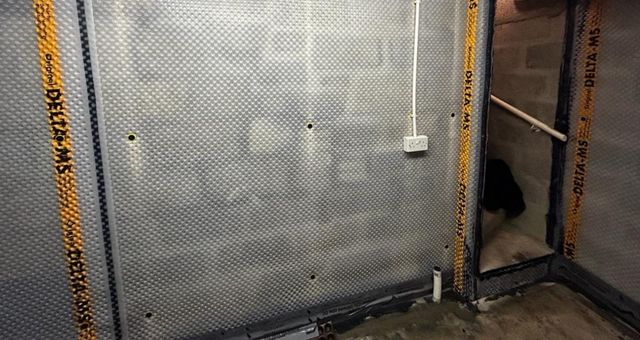
Studs built into the membrane creates the cavity which allows moisture to depressurise and run into perimeter drainage channels installed into the floor slab.
Type C Waterproofing - Drained Protection
Type C waterproofing is known as drained protection and is made up of several components that creates a system that diverts any water ingress into drainage channels and ultimately away from the premises. It is seen as a failsafe option for below ground waterproofing by providing an effective way to remove water that may find its way into the basement, including from high ground levels, surface run off and even flood water.
Typically the system has three key components, waterproof membranes, maintainable perimeter drainage channels and a sump and pump system.
- Waterproof membranes are continuously applied to walls and floors, and then sealed using waterproof tapes. The studs allow moisture to depressurise and run into the perimeter drain.
- Perimeter drains are typically installed at the wall floor junction and collect any water in the system and direct it to a sump pump or in some cases a gravity led drain where topography allows. These are installed with accessible maintenance ports directly into the floor slab.
- Sump pumps are essentially the beating heart of a Type C system, responsible for discharging moisture away from the below ground space. They are designed to deal with ingressing water in the system, and are installed with back up pumps, battery backups and high water level alarms to give homeowners peace of mind during periods of high rainfall, flooding and even mains power outages.
A Type C system requires expert design in order to work as intended, and the installation process requires meticulous attention to detail.
Designing a Type C System
Designing a robust Type C waterproofing system can be more complex than first thought, as there are many factors that need to be considered. Type C systems are versatile and flexible, which means they must be designed specifically for each individual below ground structure, and must take into account external factors such as how leaky the basement is, topography, flood risk and water tables. There is no one size fits all for Type C waterproofing - hence why it is so important to seek advice and recommendations from a CSSW qualified surveyor at the earliest opportunity.
If Type C systems fail, either from poor design or being incorrectly installed, it can lead to further expensive remedial work being undertaken, as well as damage to any stored goods and furnishings.
A CSSW qualified surveyor will take all external factors into account, while designing a membrane system fit for purpose, along with drainage channels and sump pumps designed to withstand water ingress. If the basement is large enough, you may require extensive perimeter and cross floor drainage channels with a number of sump pumps. A correctly designed system will prevent moisture, dampness and smells from penetrating into the habitable environment.
The first step is to have a comprehensive waterproofing survey carried out to determine the requirements of your basement, cellar or below ground space. The surveyor will provide you with advice and recommendations for a cavity drain membrane system if required, and depending on the end use may provide details for a combined waterproofing system to meet BS8102 guidelines, which will mitigate the risk of failure.
How do Cavity Drain Membrane Systems Work?
Type C drained protection is the most reliable and risk free type of waterproofing, as it provides a contingency plan for internal environments that must be kept 100% dry, through a maintainable and accessible system.
Typically the system has three key components, waterproof membranes, perimeter drainage channels and a sump and pump system. This makes it a water management system for water that has penetrated through basement walls, differing from a Type A tanking system that focuses on creating a barrier to stop moisture penetration from entering the basement entirely.
The gap between the waterproof membrane and the basement wall creates a cavity, which will depressurise moisture and direct it to perimeter drainage channels.
Cavity drainage channels capture the water ingress collected through the cavity, with channels that are installed in the floor slab. They must always include inspection ports, in order for inspection of blockages and where required maintenance, providing a long term failsafe.
These channels can direct the moisture away from the property via gravity led drainage, but most typically they will direct moisture to a sump pump installed directly into the floor slab. Sump pumps come in various sizes and usually contain a main pump and a backup pump. They are often fitted with high water level alarms, as well as battery back ups in case of power failure during periods of high rainfall or bad weather.
Membrane systems are hugely flexible and versatile and can be used on a range of projects from domestic basement conversions to large commercial projects, and even listed buildings given they are reversible.
Internal spaces are left completely dry, with the membrane system collecting and dispersing moisture away from the property while being out of sight behind dry lining and plasterwork. They do require maintenance to keep the system working as intended, and membranes must not be punctured or the system can fail. That said, they are an incredibly effective way of keeping your basement dry, and as part of a combined waterproofing system designed to BS 8102 are often seen as a worthwhile investment for property owners across the country.
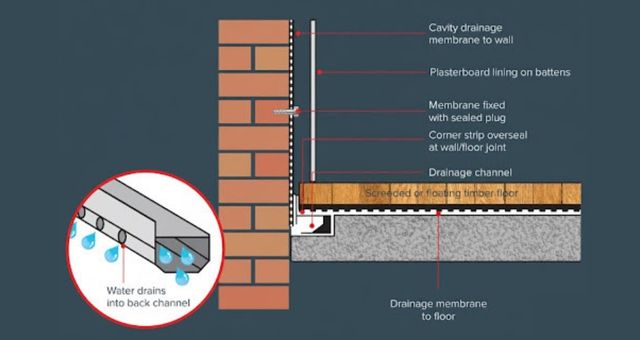
A Type C system uses a combination of waterproof membranes and drainage channels to direct water to a sump pump or away through gravity.
Cavity Drain Membrane Installation
Cavity drain membrane systems can easily be installed to stonework, brickwork, blockwork or concrete walls making it a versatile and flexible system for waterproofing basement and cellar conversions.
If waterproofing is being carried out to meet BS 8102 standards, Rentokil Property Care will typically install a combination of a Type A tanking system to limit and slow water ingress and a Type C cavity drainage membrane system to remove any remaining ingress.
A combined system that meets BS 8102 will be backed by a 10 year guarantee, giving you long term peace of mind.
Preparation
Rentokil Property Care technicians will first prepare the surface of walls by removing any deteriorated plaster or rendering. Drainage channels will be installed into the floor slab around the perimeter of the basement. These will be installed in the existing floor slab, or a new floor slab incorporating drainage channels rebates will be installed.
Installing a Sump Pump
The sump pump will be installed into the floor slab, before being concreted in place. These pumps are usually protected with high water level alarms and battery backups which are installed in a convenient location.
Membrane is installed
Membranes are then applied to the walls and floors, before joints are sealed with butyl tape, and waterproof detailing is installed around service penetrations in order to create a fully waterproof system. Every precaution must be taken to ensure that the cavity drain membrane is not damaged and seals are correctly installed. The cavity drainage membrane is fixed to the wall using watertight self-sealing fixing plugs.
Installed floor membranes have deeper studs compared to wall membrane to provide extra drainage capability, with a concrete screed or a chipboard flooring, laid directly onto the membrane once installed. Insulation can also be incorporated if required.
Internal Finishes
Once the membrane system has been installed plaster can be applied directly to meshed membrane if used, or waterproof fixing plugs can be used to install dry lining with plasterboard. This will allow you to decorate your new basement to suit your design.
Inspection hatches are installed where sump pumps are located for easy access, while ventilation and heating will now be installed, if required.
Quality Control
It's incredibly important to use competent, experienced and trustworthy installers to prevent mistakes occurring when installing a cavity drain membrane system. If the wrong sized pumping system is used or the membrane is punctured or waterproof tape is incorrectly installed it can lead to a failure of the system, water ingress and extremely expensive remedial works being required.
Rentokil Property Care technicians are experienced in using waterproof materials, with our teams regularly carrying out waterproofing installations across the country.
For further peace of mind, Rentokil Property Care have a thorough quality assurance process, with regular checks throughout the installation process. The CSSW qualified surveyor who designed the system will carry out site visits and provide a final sign off process in order to ensure our exceptionally high standards are met.n
Benefits of a Cavity Drain Membrane System
-
No hydrostatic pressure - A Type C system does not attempt to hold back groundwater so it is not affected by hydrostatic pressure, making it very effective and reliable.
-
Flexible installation - It can be installed on existing structures, and different types of masonry can be accommodated with membranes tailored to the specific needs of a property, including vaulted cellars, staircases and other features.
-
Maintains internal finishes - The membranes are installed and hidden behind decorative features, while sump pumps are hidden under an inspection hatch conveniently placed, meaning they are hidden from view.
-
Less risk of failure - Unlike Type A barrier systems, Type C systems are not susceptible to leaks caused by cracks in the structure, while drainage channels can be regularly maintained against issues such as lime build up.
-
Easily repaired - If membranes are punctured or damaged, they can be repaired without the whole system having to be replaced.
-
Maintainable - A type C system is designed to be maintainable, with inspection ports for perimeter drains and inspection hatches for the sump pumps. Sump pumps are installed with a back up pump, high water level alarms and battery back ups for extra levels of protection.
-
Reversible for historic and listed buildings - Unlike Type A systems that are applied directly onto masonry, a Type C system can be fully reversible making it a versatile option for listed buildings and properties that must adhere to preservation guidelines.
-
Long term protection - When designed by a CSSW qualified surveyor and installed to BS 8102 guidelines, a Rentokil Property Care system is backed by a 10 year guarantee.
Why Rentokil Property Care?
- Rentokil Property Care have CSSW qualified surveyors working out of our network of branches across the UK, meaning we have a waterproofing expert local to you. We can work with homeowners, architects, contractors and commercial partners to design a basement waterproofing system to suit your project.
- Rentokil Property Care are approved installers of Delta, Koster, Newton and Safeguard waterproofing products, with both in house and onsite training carried out to qualify as a trusted partner. We use waterproofing products that undergo an extensive testing process by the manufacturers to attain BBA/BDA certification.
- A Rentokil Property Care basement system designed to BS8102 standard comes with a 10-year guarantee - giving you long term protection and peace of mind.
- We are proud members of the Property Care Association (PCA). When you work with us you can be assured that you’re getting professional and honest advice, and treatments following the industry best practice.
- Our damp proofing, structural repairs and timber treatments are rated ‘Excellent’ with over 1,000 reviews from our customers - showcasing our professionalism.
- We are endorsed by Which? Trusted Trader - meaning our customer service and workmanship has passed the rigorous trading standards assessments.